
Start a Reading Residents Directory Search
There is no master public roll for all Reading households. Instead, the right Reading residents directory source depends on the starting point. A street address belongs first in the county property system. A recorded transfer belongs with the Recorder of Deeds. A known public case belongs in the statewide UJS docket search narrowed to Berks. An older household is often better found through the Pennsylvania Room, census material, and map evidence. Each record has a narrow role.
Property ownership does not prove who occupies a home. A voter record is controlled civic information, not a browsing tool. A directory entry is historical subscriber or household evidence, not a current-status guarantee. Keeping those distinctions clear makes a residents directory search more accurate and prevents unrelated results from being combined.
- Choose the question: parcel ownership, a public court case, a historical household, or an office-held record.
- Start with a stable key, such as a complete address and parcel ID, a docket number, or a certificate number.
- Run the custodian’s official search and capture the returned spelling, date, county, and record number.
- Check a second independent record before treating similar names as the same person.
- Use the counter, mail, phone, library, archive, or a focused records request if the online route stops.
Reading Offices Behind Resident Records
Most current Reading residents directory leads start with Berks County, not a City roster. Assessment keeps ownership and assessment records. The Recorder maintains recorded land documents. Election Services is the local voter-record custodian, while the State runs the individual status service. The Register of Wills handles estates and county marriage licenses, and the Prothonotary keeps several Common Pleas civil records. For a by-address chain, use the Reading Street Directory after identifying the parcel.
Berks County Recorder of Deeds
Services Center, third floor
633 Court Street, Reading, PA 19601
610-478-3380
Berks County Assessment Office
South Campus
400 E. Wyomissing Avenue, Mohnton, PA 19540
610-478-6262
Berks County Election Services
Services Center, first floor
633 Court Street, Reading, PA 19601
610-478-6490
Reading Residents by Parcel
The Berks County Property Records Search is the practical address starting point. Its current landing screen describes Basic Search and Map Search, with owner, street address, and parcel-ID paths. A property record can provide a situs, assessed owner, municipality, parcel identifier, and related description. The County notes that assessment maintains ownership and assessment records, but does not issue tax bills or collect current taxes.
| Property-search field | What it is for |
|---|---|
| Owner | Find a current assessed-owner record by name. |
| Street address | Locate a particular site or begin an address-based parcel check. |
| Parcel ID | Use the stable property identifier when moving from assessment to Recorder records. |
| Map Search | Orient the address against parcels, roads, and municipal boundaries. |
A mailing address in an assessment record is a tax-contact field. It may differ from the property situs. For the detailed address workflow, follow a parcel from its street number through the Reading Street Directory.
The county property-search screen shows the owner, parcel, and address paths described above.
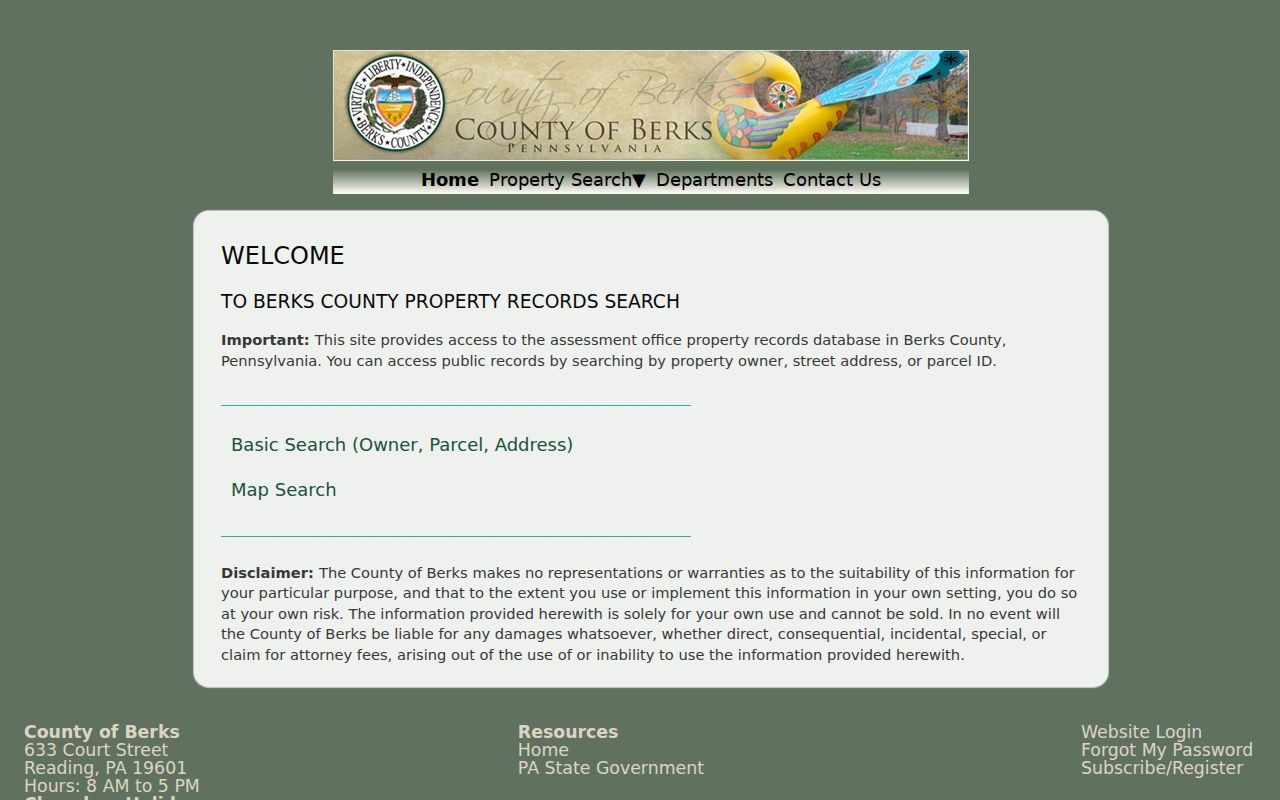
The screen is a useful lead for a Reading residents directory search, but it does not confirm every household member or current occupant.
Recorded Reading Name Trails
The Berks Official Record Search connects named parties to recorded property documents. Its Quick Search exposes a real-property department, search term, recorded-date range, Index Only or Index and Full Text OCR scope, and an Advanced Search route. Advanced fields include party, grantor, grantee, recorded date, document number, document type, volume/book/page, OCR phrase, parcel ID, municipality, and property address.
Berks says its computerized images and index contain documents recorded from 1752 onward. That does not promise reliable full-text results for handwritten material. For older work, use the party or legal-description path and ask about the counter books. Deed index books are especially important for pre-1926 deeds, which are organized by similar-sounding names. Records can be viewed or ordered online, examined in person, or requested by mail with the required fee and return envelope.
Note: A recorded deed identifies a recorded transaction and its parties, not a current move-in date or every person living at the address.
Reading Names in Public Dockets
Pennsylvania UJS Case Search is the statewide public docket-sheet service for Common Pleas, Magisterial District, and appellate matters. Enter a participant name only with a useful narrowing choice such as Berks County, a date range, case status, or docket type. If available, a docket, citation, complaint, OTN, or SID is more reliable than a name alone.
The result can show court, county, docket number, caption or parties, filing date, public events, hearings, and status. It is not a complete court file. The Berks Prothonotary is the access and copy channel for civil, family, equity, judgment, lien, arbitration, and appeal material. Court policy can limit juvenile, sealed, expunged, pending-expungement, and other protected matters.
The UJS public case-search interface is the official entry point for this route.
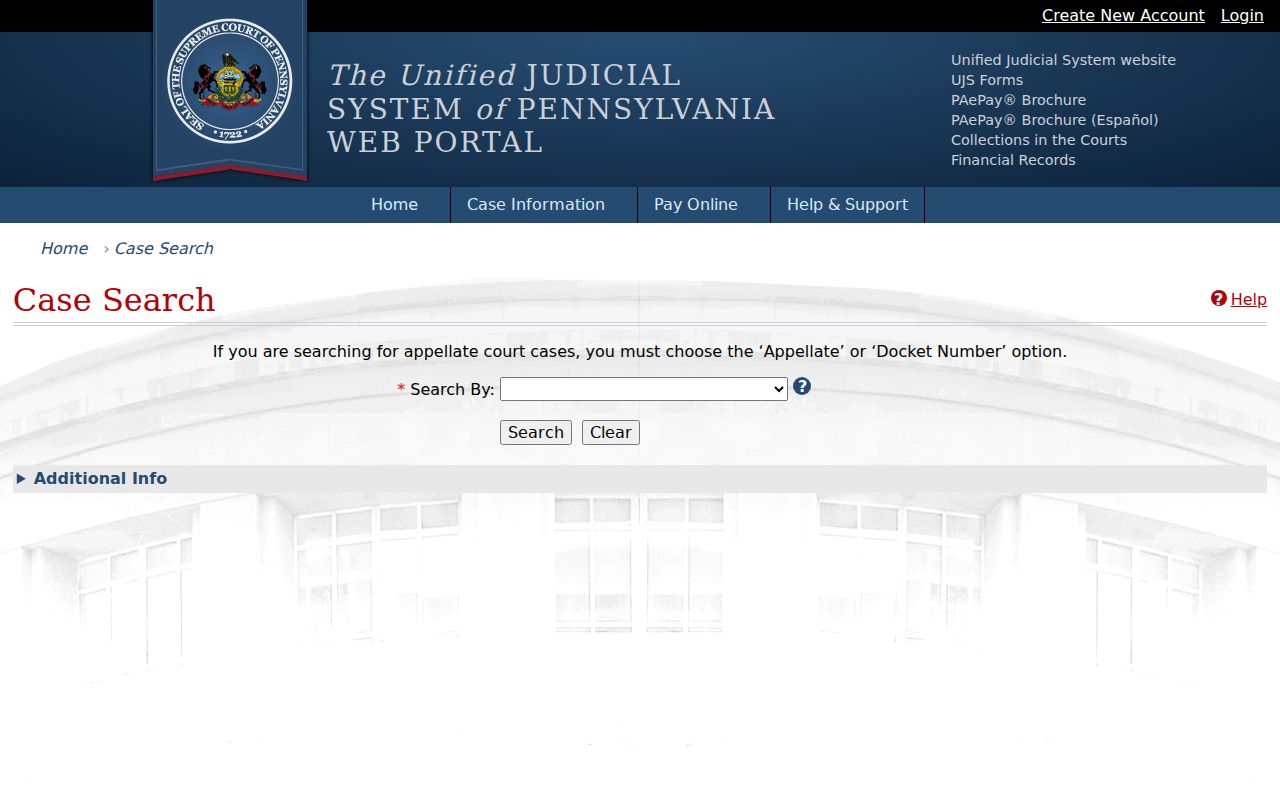
Narrowing a name to Berks before comparing a public docket result helps avoid attaching a statewide match to the wrong Reading person.
Current Reading Residents Directory Sources
Current directory-like sources list different relationships to Reading. The assessment system identifies an assessed owner for a parcel. The Recorder index lists parties to recorded documents. UJS lists public case parties. Voter registration is governed by special access rules, and the individual state service is for a voter checking personal status. City permits and code files can name an owner, applicant, or responsible party at one address, but no searchable City occupant roll was found.
| Source | Who It Lists | Keeper | Access |
|---|---|---|---|
| Assessment parcel record | Assessed owners | Berks Assessment Office | Owner, address, or parcel search |
| Recorder index | Grantors, grantees, and document parties | Recorder of Deeds | Public index; image and copy routes |
| Public docket sheet | Named parties in public matters | Pennsylvania UJS | Public portal, then court copy channel |
| Voter status or authorized file | Registration administration information | State service / Election Services | Individual tool or formal lawful request |
| City address file | Permit, inspection, or code context | Reading department / RTKL | Direct small request or formal request |
Begin with the source that matches the claim. A one-person verification sequence should combine a name with record dates and identifiers, rather than rely on a single result. Do not use a property owner, a court party, or a registration result as a shortcut to assert that everyone at an address is known.
Reading Voter Records Have Limits
Berks Election Services is the county custodian for registration data. Its Election Services page provides the official local route for specialized voter lists, street lists, labels, and related electronic material. Pennsylvania Voter Services is different: it is the individual registration-status and polling-place service, not an open directory for testing names or browsing a street.
A request for voter information carries a statutory-use affirmation under 25 Pa.C.S. §§ 1207(b) and 1404. It may concern registration information needed for election administration, but it does not reveal ballot choices and it is not a household roster. The documented channel is a written request to Election Services, with a fee and allowed use confirmed by the office.
Berks Election Services describes its local records and request route.
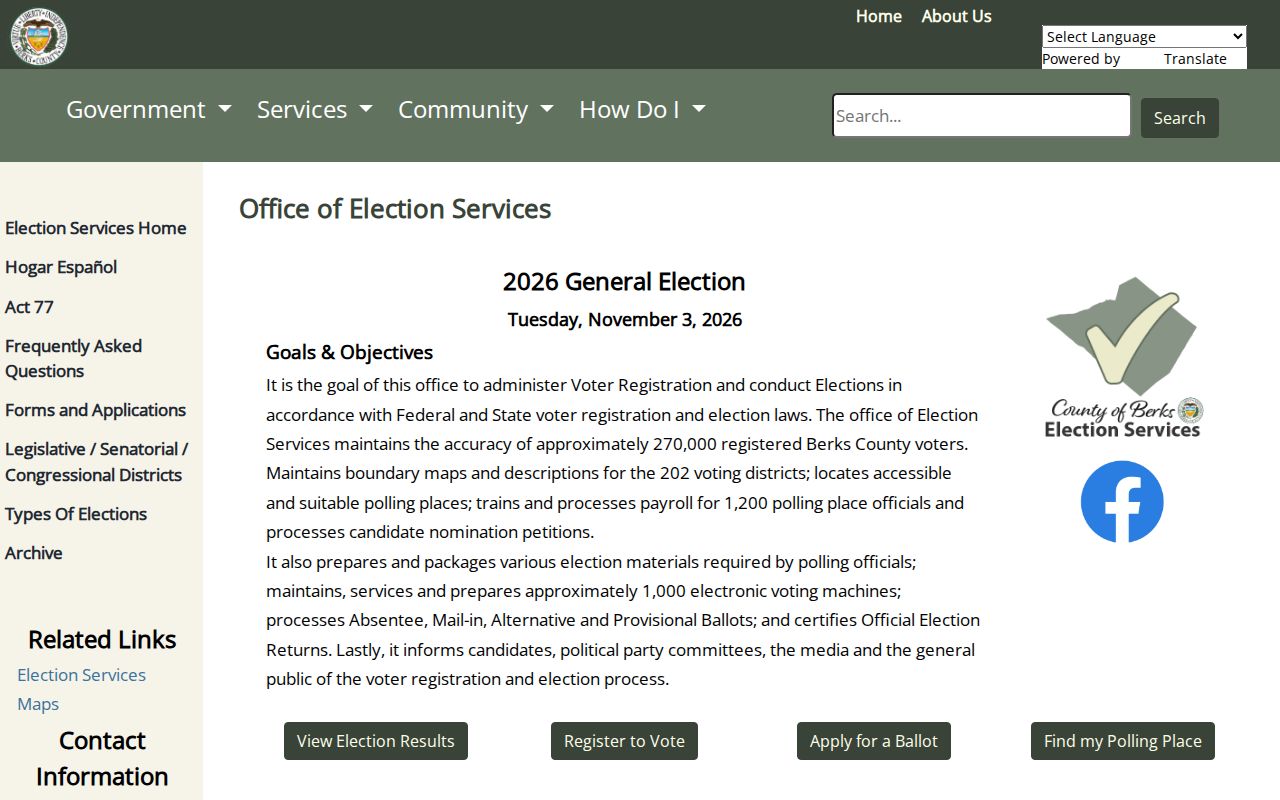
The County route is a formal records process, not an invitation to turn voter information into a public Reading residents directory.
Pennsylvania Voter Services is the state’s individual status entry point.
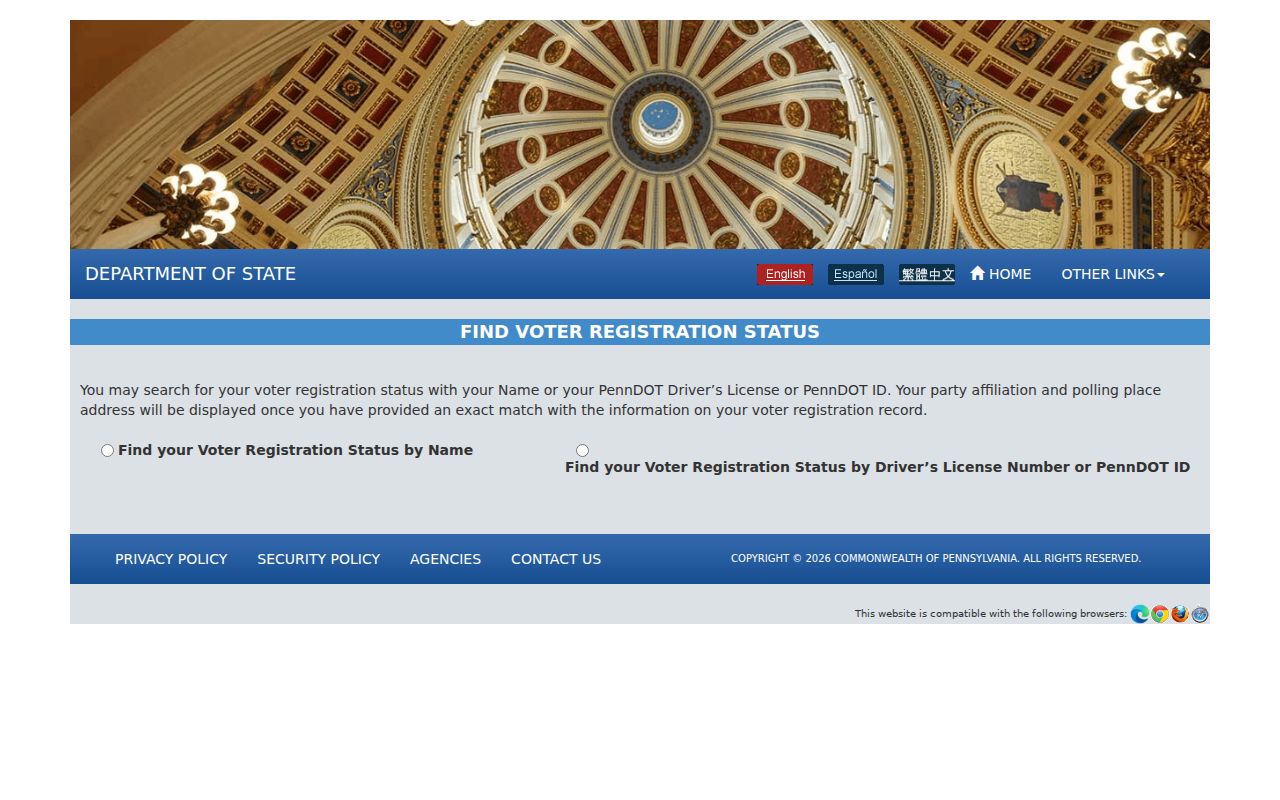
Use the individual service for its intended status and polling-place purpose rather than as a broad name search.
Reading Vital and Estate Routes
Current Pennsylvania birth and death certificates are handled by the Department of Health, with application, identification, and eligibility requirements. The Vital Records forms hub is the right route for current certified copies. The State Archives separately opens noncertified birth certificates after 105 years and death certificates after 50 years, using historical indexes and certificate details. Marriage licenses are county court records; Berks Register of Wills can certify licenses it issued.
An estate trail may run from a qualifying historical death record to the Register of Wills. The office holds probate and Orphans’ Court materials and can explain its own file and copy procedures. A death record or estate file does not establish kinship from a shared surname, so relationship questions need the actual record and appropriate legal confirmation.
The Department of Health form hub is the official starting point for current vital-record applications.
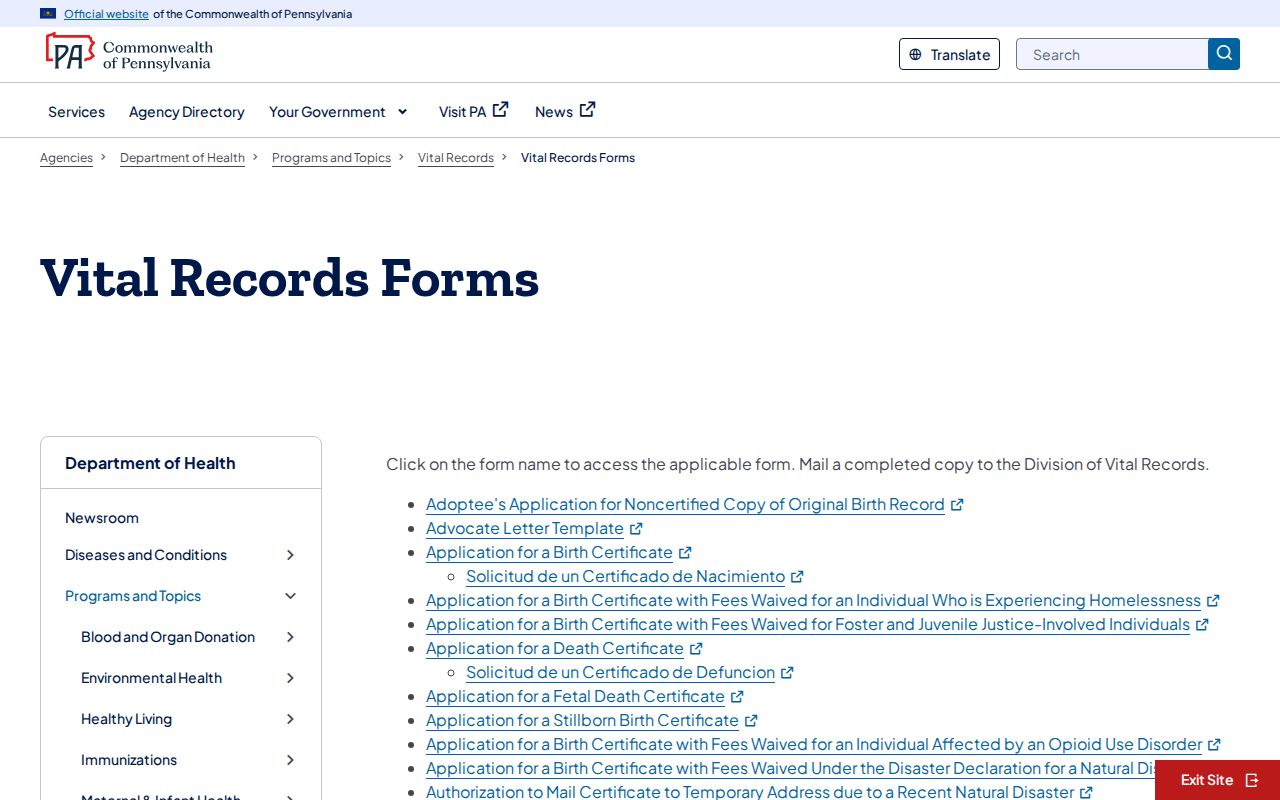
The form route reflects that current vital certificates have controlled access rather than open residents-directory searching.
Reading Records Beyond a Portal
An online search is only one access channel. The Recorder accepts online orders and supports in-person, mail, and phone follow-up. Court copies and civil records go through the Prothonotary or another correct judicial custodian. The City allows small, direct requests for certain address records, including permits, certificates of occupancy, stop-work orders, maintenance inspections, and violation notices. Longer or unavailable City material may require a specific Right-to-Know request.
The Pennsylvania Right-to-Know Law, Act 3 of 2008, normally calls for an agency response within five business days, subject to a timely interim response. It does not require an office to create a new compilation or disclose confidential material. Reading’s policy requires a signed, named request, so ask the correct department for the record type and date range instead of sending a broad resident-list request.
The Berks Prothonotary page identifies local civil-record access and copy channels.
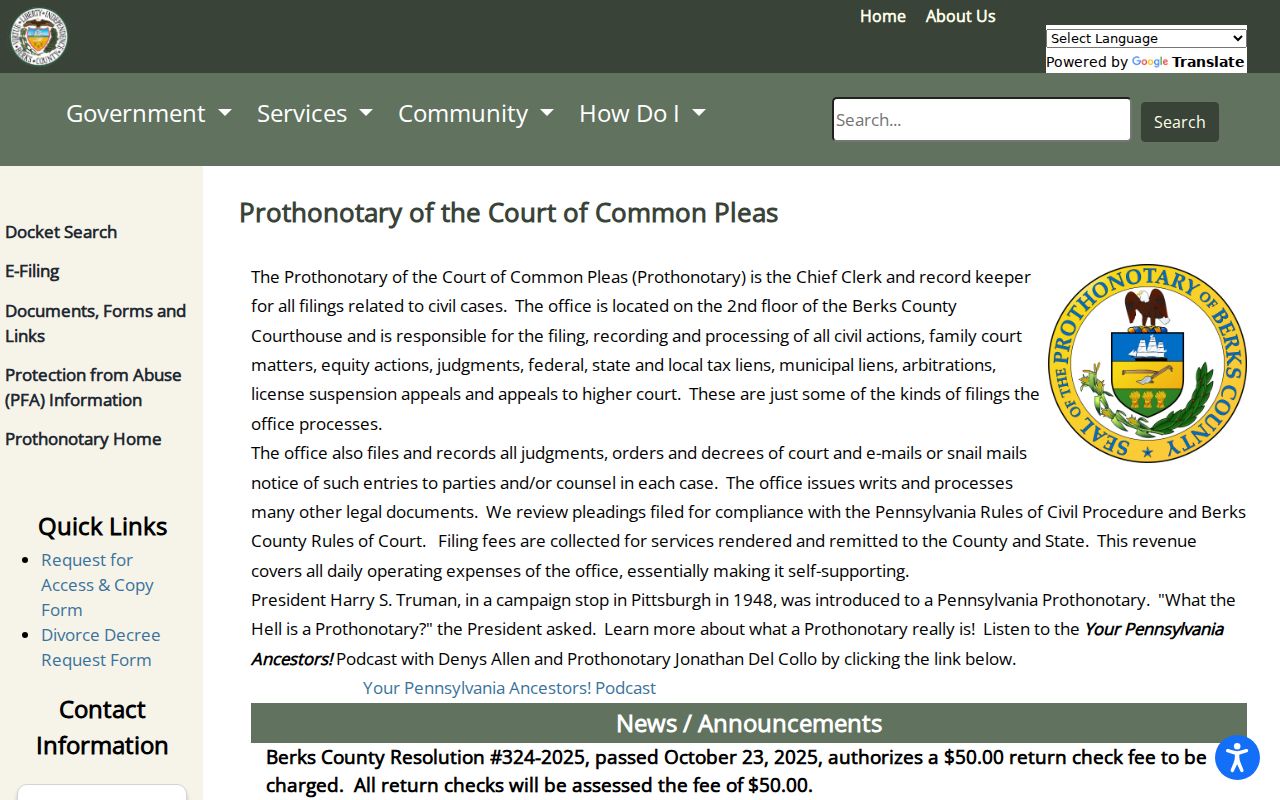
Using the correct counter or copy form is often the reliable next step after a public online record identifies a docket or case number.
Reading Name Leads Need Proof
The Pennsylvania Treasury’s unclaimed-property search can produce an apparent-owner lead for an heir or estate question. It is free to search, but a claimant must prove entitlement, and a result is not proof of identity, residence, family relationship, or ownership of the property. Use a name lead to ask the right custodian question, then corroborate it with independent evidence.
| Official record route | Best use | Important boundary |
|---|---|---|
| Assessment and Recorder | Parcel ownership and recorded transfer trail | Owner or party is not automatically a current occupant. |
| UJS and court custodian | Public docket and authorized file access | Not every case or document is publicly displayed. |
| Archives and library | Historical name, event, and household research | Historical evidence needs date and source context. |
| Treasury claimant search | Estate or apparent-owner lead | A claim requires proof; a search hit proves nothing by itself. |
Pennsylvania’s unclaimed-property search demonstrates why an official name result needs a claim process and independent proof.
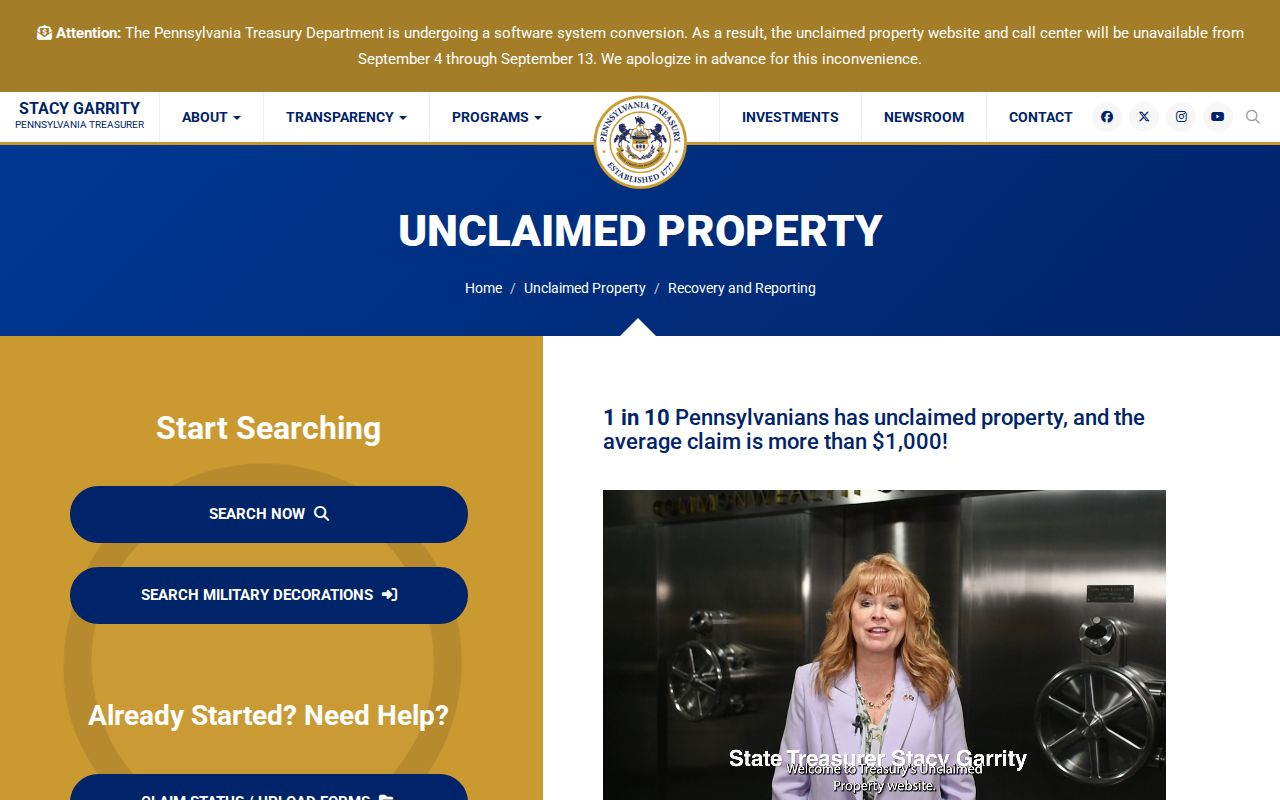
The state search is a claimant route for a specific person or estate, not a method for confirming where a Reading resident lives.
Privacy Lines in Reading Records
Public records are not an all-access file. Pennsylvania’s Safe at Home program can provide a substitute address to qualifying survivors. The Commonwealth restricts vital records, driving records, protected voter information, and many court details. The lawful response to a missing or restricted item is to use the custodian’s correction, request, archives, or privacy process, not to seek a workaround.
Lawful use. Reading records can support personal research, family history, estate work, and civic questions. Never use information found through them to stalk, harass, threaten, or harm anyone.
Keep a document number and the date of any result, then contact the agency that created it if a factual correction is needed. That is more reliable than copying data from a compiled directory and it protects people whose addresses or records are legally confidential. A property owner can also use the Recorder’s Property Alert with a name and parcel ID. The alert is designed to report a matching document after it records, not to prevent fraud or prove that fraud occurred. Review any alert against the actual record and contact the Recorder directly.
Historical Reading Residents Directory Shelves
For older Reading households, the Pennsylvania Room at Reading Public Library is the local first stop. Its noncirculating collection includes archived City telephone directories and telephone books, Berks suburban books, census, church, cemetery, family-history, yearbook, and map material. The room is staff-assisted, so call or email with a name, address, and approximate year rather than assume a full remote search or a continuous directory run.
Reading Eagle access there includes microfilm and digital archive material from October 1989 forward. The Berks History Center adds cemetery, church, PASSING SCENE, and library indexes. Ask specifically for a reverse, criss-cross, householder, or street section if the goal is an old address. The official Library page confirms telephone-book holdings but not exact reverse-directory years, so the collection must be checked by staff. The fuller historical shelf is in the Reading Directory Book.
- Index
- A finding aid that points to a record, not necessarily the original record itself.
- Parcel
- A county-defined property unit, useful for linking a current address to recorded land documents.
- Criss-cross directory
- A reverse or street-arranged volume that may link an address to a listed household or subscriber for a particular year.
Reading Street Names Change Over Time
Historical address work needs context before it becomes a people claim. Reading was surveyed in 1748 with 520 lots and 204 outlots. Penn Street was the east-west spine, and Fifth Street was called Callowhill before the 1833 street-name changes. An old directory, deed, or map may therefore use a name that a modern address search does not recognize. Preserve the period spelling and compare it with the parcel’s legal description and the relevant map.
Note: A historic street name is a research lead, not a basis for replacing a recorded legal description or guessing a modern house number.