
Reading Sources for Previous Residents
Previous residents of a Reading address are found by building a dated trail, not by treating one result as a full history. The Berks property record supplies the parcel and present assessed owner. The Recorder supplies the land-document chain. Library telephone books, newspapers, maps, and census schedules can place names around the property at particular times. City permit and code material can supply a construction or use date, but it does not identify everyone who lived there. Keep the source type and the date beside every name.
| Historical source | Era it reaches | Reading access route | What it can establish |
|---|---|---|---|
| Berks Recorder computerized index and images | 1752-present, according to the Recorder | Online search, counter, phone, or mail copy request | Recorded parties, dates, legal descriptions, and document trail |
| Original deed books | 1752-1953 | Recorder of Deeds | Original historical record when an image or search result is unclear |
| Recorder microfilm originals | 1953-2004 | Recorder of Deeds | Intermediate original-record format |
| Reading telephone directories and books | Archived, exact local run not published | Reading Public Library Pennsylvania Room | Dated name-and-address lead |
| Federal census schedules | 1790-1950, latest open schedule 1950 | National Archives and local research collections | Household evidence at a census date |
| Sanborn maps and City address records | 1887 and 1920 maps; City direct categories have stated date limits | Library of Congress; City counter or Right-to-Know route | Building, street, construction, inspection, or permit context |
For a recent transfer, begin with the parcel and deed chain. For an older household question, start from the closest confirmed directory or census date and work back to the parcel. The Berks Recorder Quick Search is the official online entry point for the recorded-document part of that work.
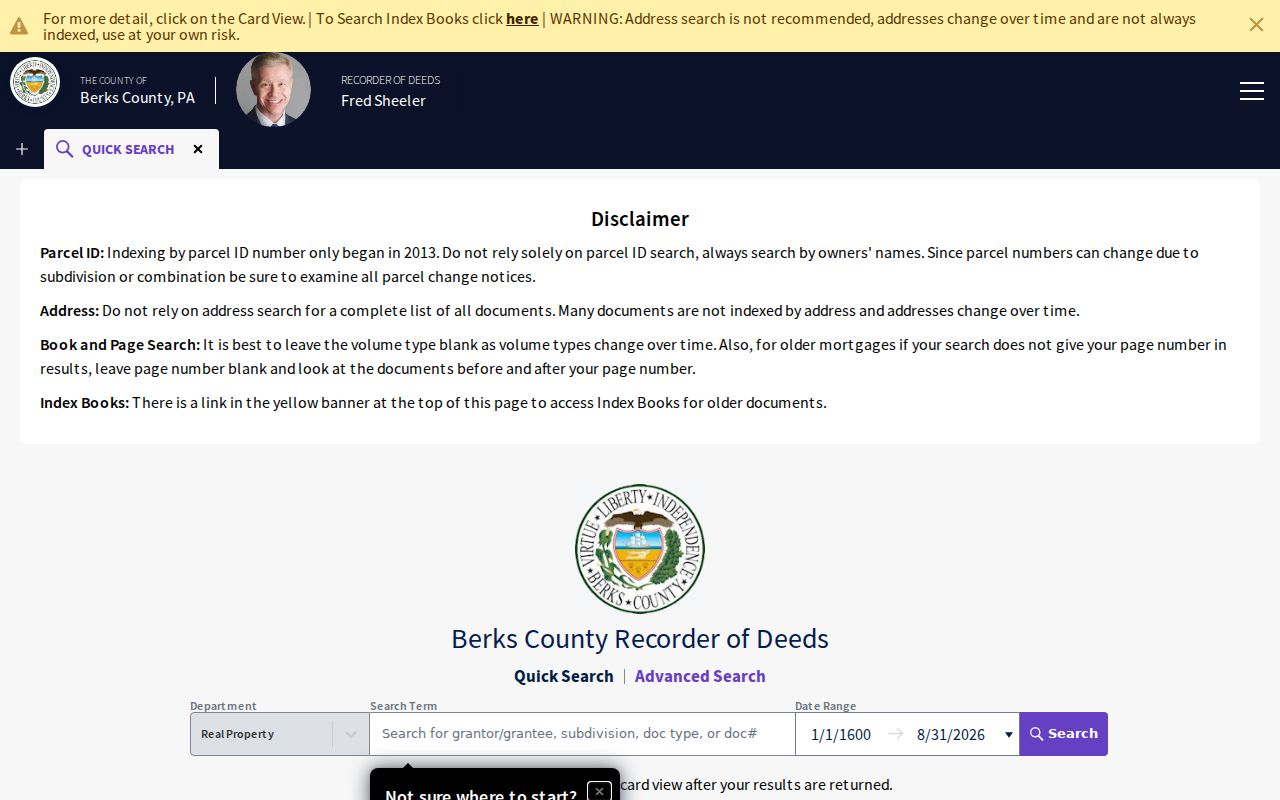
Quick Search accepts a term and date range, with index-only and index-plus-OCR scopes. It is a route to documents, not a statement that a named party lived at the property on the recorded date.
Note: Record the source date and access route as well as the name, because a property transfer, telephone listing, and census entry answer different historical questions.
Previous Residents Start With a Reading Parcel ID
Begin an address history in the Berks County Property Records Search. It offers owner, street-address, and parcel-ID paths. Copy the searched street address, the Property ID or UPI shown, the municipality if shown, and the legal description. The UPI is a stable county identifier for a parcel. A legal description identifies land through lots, blocks, subdivision language, or other recorded boundaries. Both are more dependable than a street number when a building is divided or an old street label changes.
Modern Berks real-estate Recorder documents have required a parcel ID since January 2, 2013. In Advanced Search, the Recorder offers party, grantor, grantee, recorded date, document number, document type, book and page, OCR full text, parcel ID, municipality, and property-address fields. Use the parcel and legal description to test whether documents belong to the same property instead of joining records only because a party name looks familiar.
The Berks Recorder Advanced Search shows the fields used to follow Reading previous residents through recorded property documents.
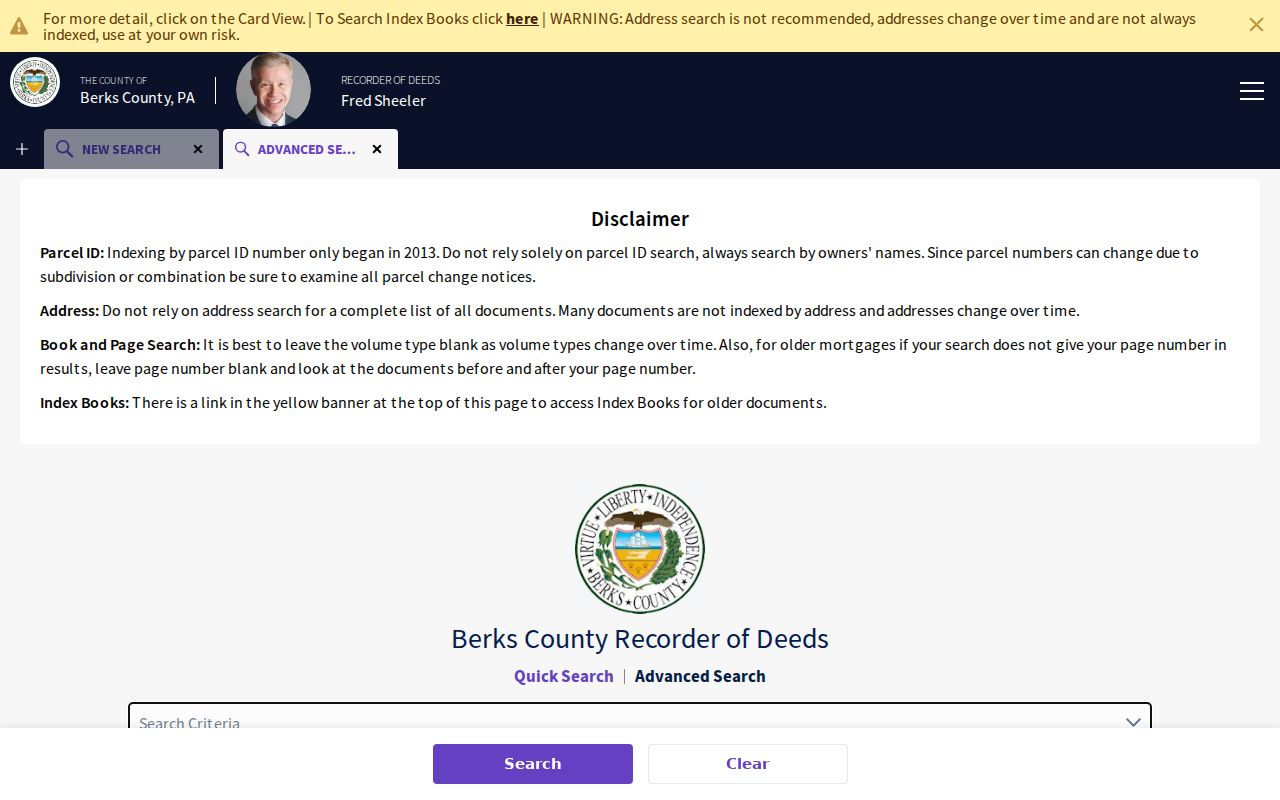
For a party search, the Recorder documents a last-first token format. A poor OCR match or a changed spelling should send the search back to party variants, book and page, or the counter rather than ending the chain.
Berks Records for Reading Previous Residents
The Recorder says its computerized index and images contain every document recorded since Berks County began in 1752. That broad reach does not mean every old handwritten name will behave like a modern text search. Original books remain the original record medium for 1752-1953, microfilm is the original record medium for 1953-2004, and digital retention begins in 2004. The format tells you how much a spelling, index-book, or image check may matter.
The Berks County Recorder of Deeds accepts the full access chain: online image and copy ordering, in-person examination or copies, mailed copy requests with the fee and a self-addressed stamped envelope, and phone assistance at 610-478-3380. Its Services Center counter is on the third floor at 633 Court Street in Reading, with published weekday hours of 8 a.m.-4 p.m. Regular copies are $0.50 per page and online certified copies are $10 per document; confirm the checkout total because card processing charges can change.
The Recorder of Deeds historical-record access page is the source for the online, counter, mail, and phone routes behind a Reading address trail.
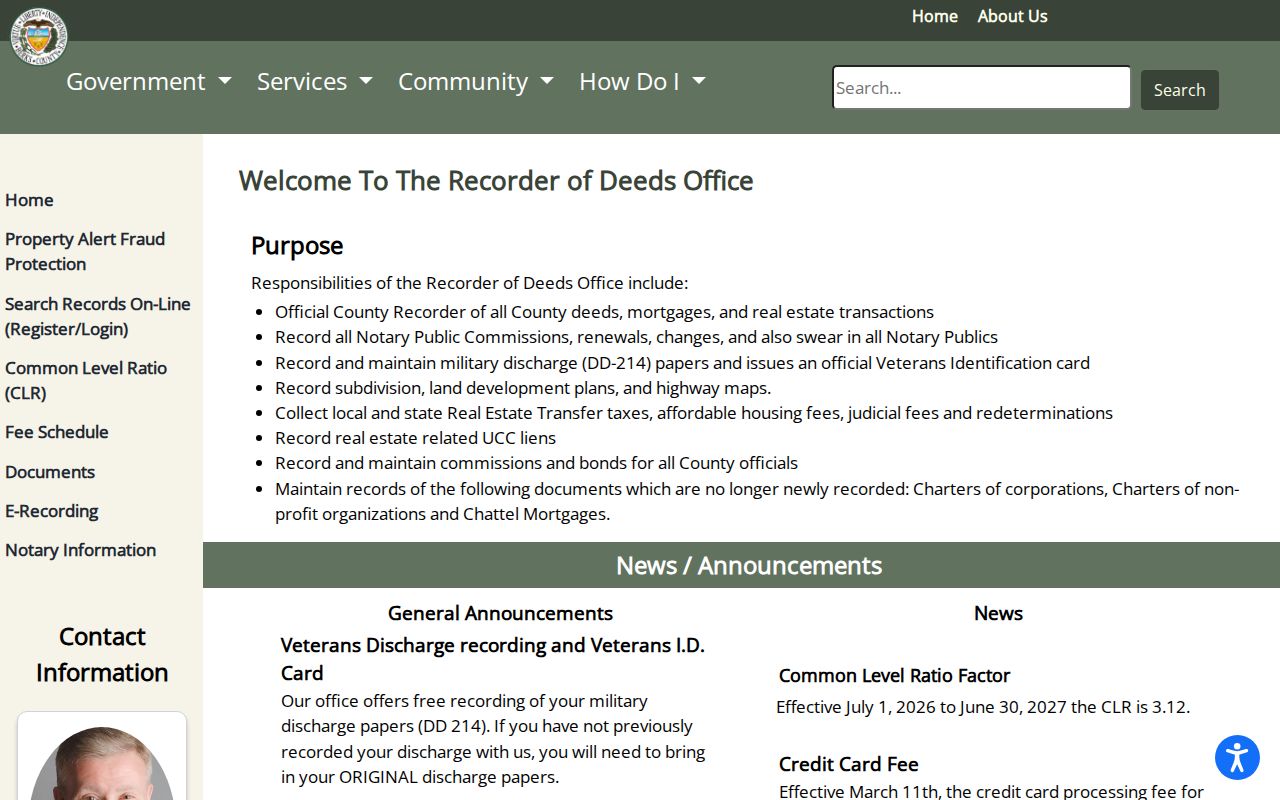
For deeds before 1926, the County's instructions point researchers to Index Books organized by similar-sounding names. Use alternate spellings and the legal description, not just an OCR phrase or a modern street-address search.
Note: A deed party is evidence of a recorded transfer, while an address listing or census entry is the stronger source for a person at that location during a particular interval.
Trace a Berks Deed Chain Backward
A chain of title is the sequence of recorded transfers for the same land. It is the backbone for house history, but it does not establish move-in or move-out days. Read each image and compare its legal description before proceeding. A grantor transfers an interest. A grantee receives it. When the same parcel appears across documents, the later seller often becomes the person whose earlier acquisition deed should be found next.
- Find the current assessed owner, UPI, and legal description in the Berks property record.
- Search that owner or organization as a grantee in the Recorder, then open the likely deed image.
- Record the document number, recorded date, grantor, grantee, book or page when given, and legal description.
- Search that grantor as an earlier grantee, then compare the lot, subdivision, and description before linking it.
- Repeat backward. When a match is unclear, use the Recorder counter, original books, or microfilm instead of forcing a link.
- Grantor and grantee
- The person or entity transferring an interest and the person or entity receiving it.
- Chain of title
- The documented sequence of ownership transfers for the same described land.
- Legal description
- The recorded land description that can survive a changed street name, number, or subdivision arrangement.
- UPI
- The county property identifier used to connect an assessment record with a parcel and related Recorder documents.
Reading Address Changes and Past Residents
Reading was laid out in 1748, Penn Street formed its east-west spine, and Fifth Street was formerly called Callowhill. Many street names changed in 1833. Research did not locate a verified citywide renumbering year. When an older entry has a different name or number, treat it as an address-continuity question. Compare the deed's legal description, lot or subdivision, historic maps, and nearby street references before attaching past residents to the modern address.
The Pennsylvania State Archives Berks microfilm guide provides a parallel historical route, listing tax records from 1751-1871, deeds from 1751-1867, and grantor-grantee deed indices from 1752-1926. It also lists Reading minutes and ordinances from the 1830s. Order or inspect a named series, book, and year rather than requesting an open-ended address search.
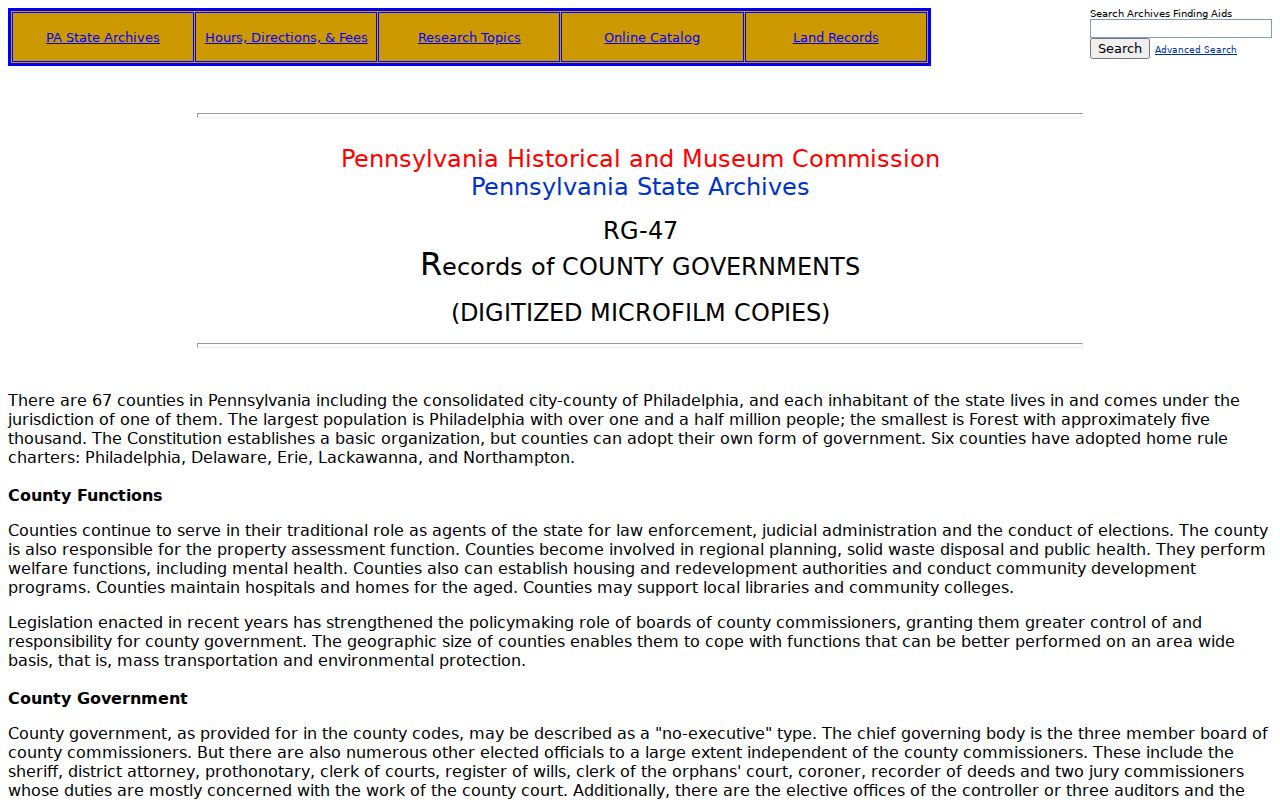
That archive route can test a difficult deed party or a street-history question when a modern search screen gives too little context. It does not promise that staff will search unindexed county microfilm for an entire address history.
Reading Sanborn Maps Set Building Context
Sanborn maps help date a structure and make sense of a street, not name its residents. The Library of Congress provides an 1887 Reading Sanborn set with 48 sheets and a 1920 Reading set with 50 sheets in volume 2. Match the sheet, building footprint, construction or use notation, and nearby roads against a directory or deed description. This can show whether a building existed at the map date or whether a block looked different.
Use this short evidence flow for a Reading address: parcel and UPI to deed chain, deed description to historic map, telephone directory to a dated name-and-address lead, census to a household, then obituary or probate material to test the closing period. Each arrow needs a date and a source reference. For a construction, inspection, or permit date that is not online, use the Reading Right-to-Know instructions. The City directs small address-specific requests to departments and moves larger requests into its signed, specific records-request process.
Note: If the street name, number, parcel ID, ZIP, municipality, and legal description conflict, pause the trail and resolve the place before assigning a past household.
Reading Previous Residents in Households
Deeds explain ownership, but household work needs another layer. The Pennsylvania Room keeps archived Reading telephone directories and books, maps, yearbooks, census, church, cemetery, and Reading Eagle material. Its public page does not verify an exact reverse or criss-cross run, so ask staff for a reverse, street, householder, or classified volume for the precise year. The collections themselves are described on the Reading city directory page.
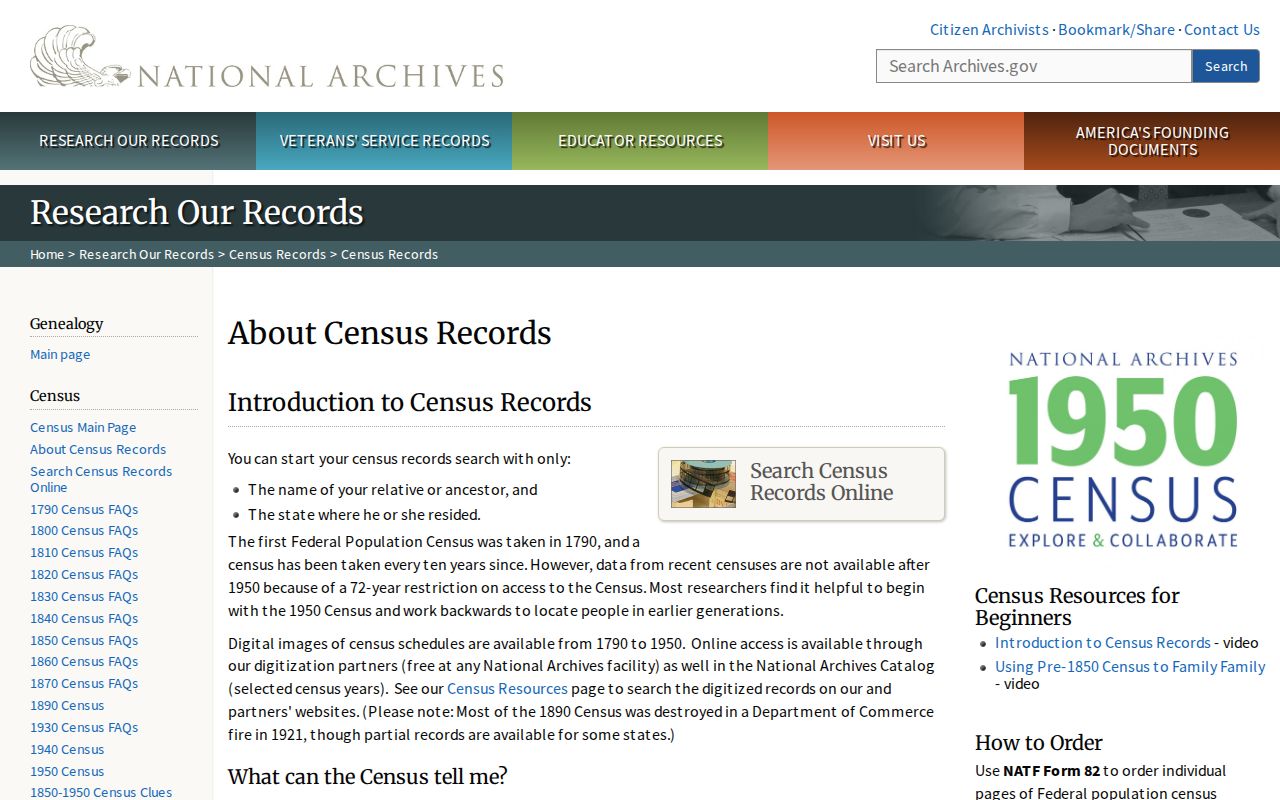
The National Archives census research page identifies the open schedules through 1950. From 1850 through 1950, schedules may include household members, age, birthplace, relationships, and often street details, with fields varying by year. Start at the closest available schedule and compare it with the surrounding telephone-book years. The 1890 federal population schedules were largely destroyed, so bridge that national gap with local directory, deed, tax, newspaper, map, and 1880 or 1900 census evidence.
The National Archives historical census research route is shown here for the Reading past-residents household step.
A person missing from a telephone book may have moved, used a different name form, lacked service, or been omitted by the publication. Treat the absence as a question to test, not a final answer.
Lawful use. Reading past-residents research is appropriate for family history, estate questions, and property history. Do not use historical or current records to stalk, harass, or track a living person.
Closing a Reading Past-Resident Interval
When a name stops appearing, first identify the last confirmed deed, directory, census, or newspaper mention. Then test a later transfer, mortgage satisfaction, obituary, cemetery item, or estate record. An estate filing may mark a succession period, but its filing date does not prove a person's last day at the address. The Berks Register of Wills holds permanent probate and Orphans' Court files and serves as the county marriage-license custodian, while historical vital records follow separate state and archive rules.
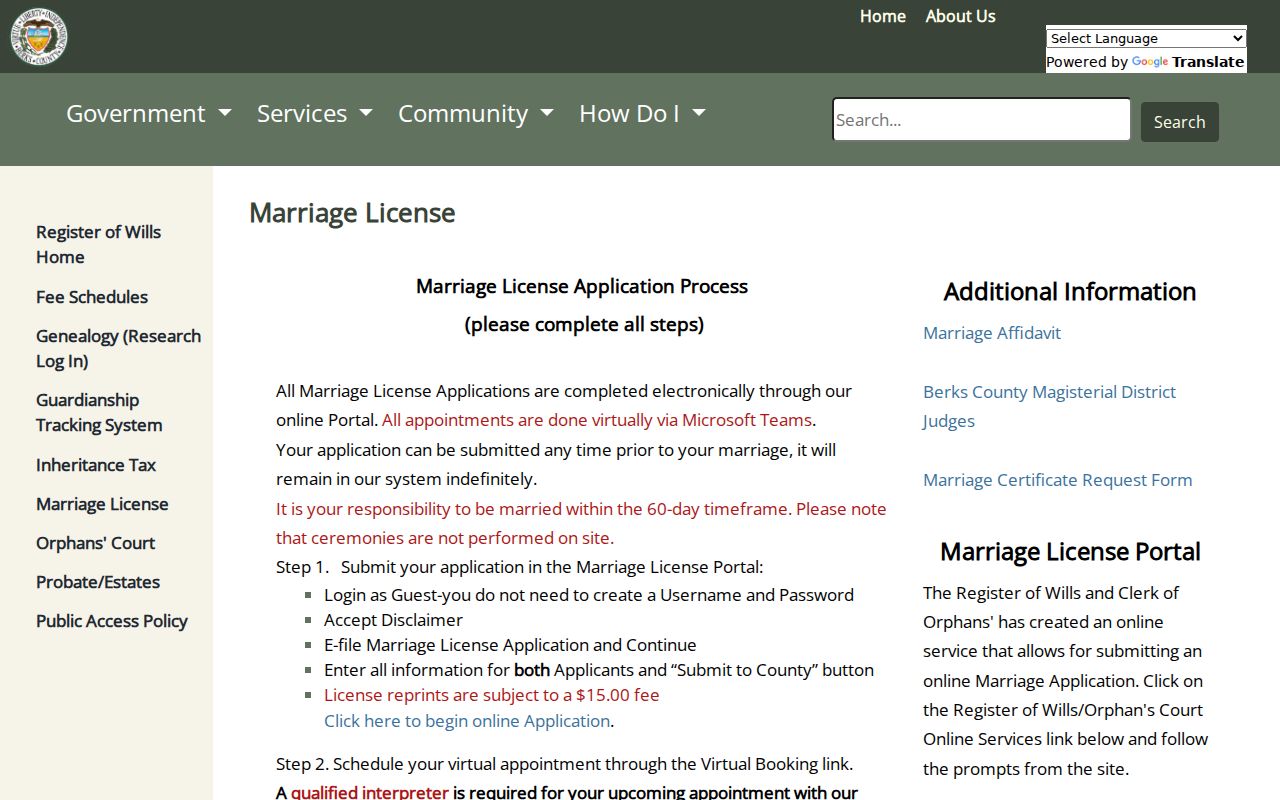
The Berks marriage-license procedure shows a county vital-record channel that is not a public name index. A county certification is appropriate only for a license the office issued. For a focused historical request, supply the name variants, address, era, and the record question instead of asking a library or clerk to reconstruct a broad personal profile.
Keep a research log with the document number, volume and page, map sheet, repository, source date, and any unresolved conflict. That record lets another family member or heir repeat the work without turning an uncertain lead into a fact.